Civil Rights Icon Jesse Jackson Has Passed
He fought for generations of black people to be able to have a better life. We take a moment and reflect on the man who walked alongside Dr. Martin Luther King.
BUSINESSCHURCH LEADERSCHRISTIAN NEWSCHURCH NEWSMAR 2026 ISSUE
Christianpreneur Writing Staff
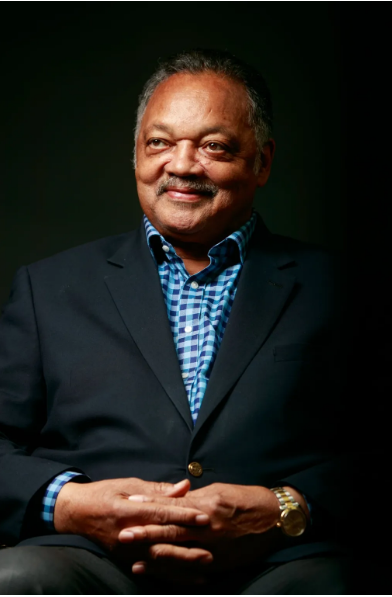
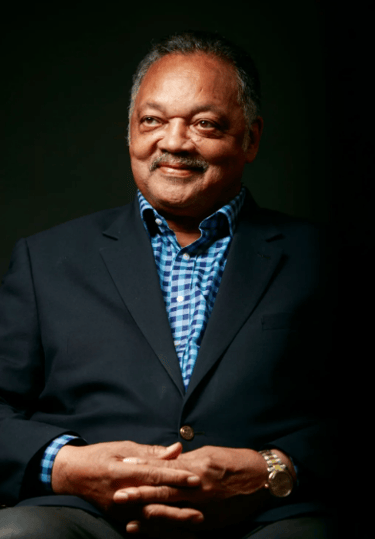
Jesse Jackson grew up in the segregated South, the son of a teenage mother who refused to let poverty define her child's destiny. From his earliest years, he demonstrated the preternatural gift for language and leadership that would one day move millions. After a brief stint on a football scholarship at the University of Illinois, Jackson transferred to North Carolina Agricultural and Technical State University in Greensboro, where the Civil Rights Movement was not a history lesson but a living reality unfolding outside his dormitory window.
It was at North Carolina A&T that Jackson found his purpose. He was elected to student government, became a campus quarterback, and threw himself into the movement with the same fierce energy he brought to the playing field. He went on to study at the Chicago Theological Seminary, and it was there that he connected with the Southern Christian Leadership Conference and, ultimately, with the man who would become his mentor: the Rev. Dr. Martin Luther King Jr.
Jackson stood beside Dr. King at some of the most consequential moments of the 20th century. He was present on the balcony of the Lorraine Motel in Memphis, Tennessee, on April 4, 1968, the night King was assassinated. That night changed everything. For some, it would have been the end. For Jesse Jackson, it was a calling to carry the torch forward, no matter the cost.
Operation PUSH and the Rainbow Coalition: Building Power from the Ground Up
In 1971, Jackson founded Operation PUSH, People United to Save Humanity, a Chicago-based organization built on the belief that economic empowerment was the next frontier of the Civil Rights Movement. While others marched for the right to sit at the lunch counter, Jackson was determined that Black Americans would one day own the restaurant. PUSH pressured corporations to hire Black employees, contract with Black-owned businesses, and deposit in Black-owned banks. It was civil rights with a balance sheet, and it worked.
A decade later, Jackson launched the National Rainbow Coalition, a sweeping, multiracial alliance that brought together Black Americans, Latinos, Asian Americans, Native Americans, poor white workers, women, and LGBTQ Americans under one banner. The coalition was rooted in the belief that justice was not a finite resource, and that the liberation of one community was inseparable from the liberation of all.
"Our flag is red, white, and blue, but our nation is a rainbow," Jackson declared, "and we are all precious in God's sight." In 1996, PUSH and the National Rainbow Coalition merged to form the Rainbow PUSH Coalition, the organization that would be the vehicle for Jackson's activism until the very end of his life.
"Our flag is red, white, and blue, but our nation is a rainbow -- and we are all precious in God's sight."
Running for President: Cracking the Glass Ceiling of American Politics
In 1984, Jesse Jackson did something that most political observers said was impossible. He ran for President of the United States, and he was not running as a symbolic candidate. He was running to win. His campaign energized Black voters across the country, registering hundreds of thousands of new voters and demonstrating that Black political participation could reshape American elections.
He ran again in 1988, this time finishing second in the Democratic primary, winning 13 states and more than 1,200 delegates. In doing so, he shattered the perception that a Black person could not be a viable presidential candidate. His oratory during the debates and on the campaign trail was widely praised even by those who opposed him. He injected the rhythm and poetry of the Black church tradition into the presidential conversation, making room for a style of leadership that had never before been seen at that level.
Political historians would later point to Jackson's campaigns as foundational to the path that made Barack Obama's presidency possible. Jackson smashed the ceiling. Obama walked through the door.
A Voice That Traveled the World
Jackson's influence extended far beyond American borders. He secured the release of American hostages from Syria in 1983, negotiated with Fidel Castro for the release of prisoners from Cuba, and worked to free American prisoners held in Iraq. He was a diplomat without a portfolio, a preacher who moved presidents and prime ministers with the same fire he moved congregations.
Internationally, he stood against apartheid in South Africa, championed the Palestinian cause for self-determination, and consistently reminded the world that human rights were not a domestic issue. They were a universal one.
Legacy in the Faith Community: Preacher, Prophet, Pastor
To those in the faith and gospel community, Jesse Jackson was more than a politician or activist. He was a preacher in the truest tradition of the Black church, one who understood that the sermon and the protest were the same act. His voice carried the cadences of the spirituals, the urgency of the prophets, and the hope of the resurrection.
He marched with the saints and sat with the suffering. He visited prisoners, counseled grieving families, and returned again and again to the places others abandoned. When families lost loved ones to gun violence, Jackson was there. When Black communities were ravaged by economic disinvestment, Jackson was there. When the political winds turned cold, Jackson was there, insisting that the fire of justice could not be extinguished.
His mantra, "I am somebody," became a gospel unto itself, spoken in church basements and school auditoriums and crowded rallies, reminding Black children and poor children and forgotten children that their worth was not contingent on the world's recognition. They were somebody. They had always been somebody.
"He carried history in his footsteps and hope in his voice." -- Rev. Al Sharpton
The Final Chapter: Grace in the Face of Illness
In his final years, Jackson battled progressive supranuclear palsy, a rare and degenerative neurological condition that gradually robbed him of his mobility and, eventually, his voice. Those who visited him in his final months described a man who communicated through the warmth of his grip, holding hands with family and friends, squeezing them with all the love that words no longer could carry.
Even as his body weakened, his spirit did not. In March 2025, just months before his condition worsened dramatically, Jackson made his way to the Edmund Pettus Bridge in Selma, Alabama, to commemorate the 60th anniversary of Bloody Sunday, the day civil rights marchers were beaten by state troopers in one of the most pivotal moments of the movement. He bowed his head in prayer on that bridge, an old soldier honoring a sacred battlefield.
He died on the morning of February 17, 2026, peacefully, surrounded by the people who loved him most.
A Legacy That Lives On
In the days following his death, tributes poured in from across the political spectrum and around the globe. Flags were lowered to half-staff in Minnesota, Iowa, and North Carolina. Chicago's transit system displayed his portrait and his famous mantra on digital screens throughout the city. Mourners lined up outside the Rainbow PUSH Coalition headquarters for hours to pay their respects, many weeping openly, others raising their fists in solidarity.
Rev. Al Sharpton, one of Jackson's closest allies and fellow civil rights leaders, said it best: "Our nation lost one of its greatest moral voices. Reverend Jackson stood wherever dignity was under attack, from apartheid abroad to injustice at home. He carried history in his footsteps and hope in his voice."
His son, Congressman Jonathan Jackson, said his father "had a heart for humanity" and wanted to be remembered as a man of faith who believed in both personal salvation and social salvation. His daughter Santita Jackson described him simply as a doting father whose greatest gift to his children was his presence.
The Rainbow PUSH Coalition, in its official statement, said it most clearly: "His unwavering commitment to justice, equality, and human rights helped shape a global movement for freedom and dignity. A tireless change agent, he elevated the voices of the voiceless, leaving an indelible mark on history."
What His Life Means for Us Now
Jesse Jackson was not a perfect man. No great figure in history is. But he was a faithful one. Faithful to the gospel of justice. Faithful to the dignity of Black life. Faithful to the belief that America, for all its failures and contradictions, could be made more just, more equitable, and more humane.
He leaves behind his beloved wife, Jacqueline, their children Santita, Jesse Jr., Jonathan, Yusef, and Jacqueline, their daughter Ashley, and a generation of grandchildren who bear his name and carry his blood. He also leaves behind something even larger: a movement, a methodology, and a moral imagination that belongs to all of us.
The work is not finished. The struggle for voting rights, economic justice, educational equity, and the full dignity of Black life continues. But because Jesse Jackson lived and fought and prayed and preached for more than six decades, that work stands on a foundation far stronger than it would have been without him.
A mighty lion has passed. But lions leave cubs. And the next generation is watching, learning, and rising.
Rev. Jesse Louis Jackson Sr. | October 8, 1941 -- February 17, 2026
"I am somebody."
A Mighty Lion Has Passed
The Life, Legacy, and Enduring Impact of the Rev. Jesse Louis Jackson Sr.
On February 17, 2026, the world said goodbye to one of its greatest champions. The Reverend Jesse Louis Jackson Sr. passed away peacefully at the age of 84, surrounded by his beloved family in Chicago, Illinois. As tributes poured in from every corner of the globe, from gospel choirs to the halls of Congress, one truth echoed louder than all the rest: the ground shifts when a man of that magnitude takes his leave.
Born on October 8, 1941, in Greenville, South Carolina, Jesse Louis Burns entered a world that did not yet know his name. It would learn it soon enough.
"I am somebody. I may be poor, but I am somebody." -- Rev. Jesse Jackson
From the Red Clay of South Carolina to the Shoulders of Dr. King













Subscribe To Christianpreneur